When surgical tools aren’t available, get creative
On Friday, I had the experience of creating a new surgical tool by combining 2 existing parts out of necessity in our OR.
I use a snake retractor for liver retraction during foregut and bariatric cases. In preparing for a hiatal hernia case, we found out that our OR has a snake retractor, but not the bed post to attaches it to the operating room bed. We have Nathanson retractors and posts, so we decided to open that tool and try to combine the two.
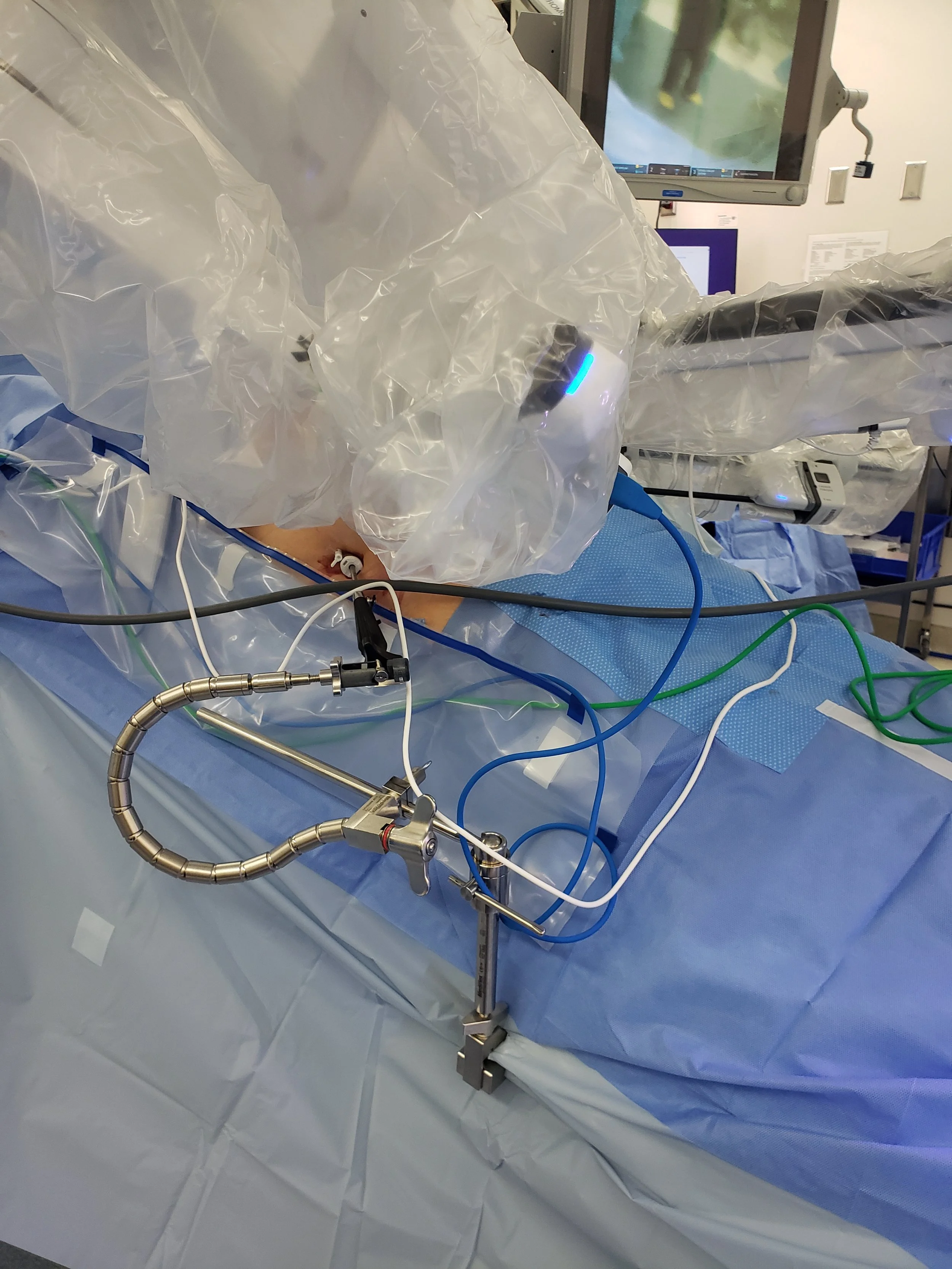
Snake retractor and bedpost at patient’s right for liver retraction in foregut and bariatric robotic cases.
The benefits of a snake retractor for liver retraction during robotic cases:
-It’s lateral
-It’s low profile
-It sets up low on the bed (at the level of the patient’s thigh)
This all means that in my cases, fewer collisions between retractor and robotic arms.
So, we set up the Nathanson bed post where it normally goes lateral to the patient’s right chest on the bed. We positioned the Nathanson arm to attach low and lateral to the snake retractor. An 5mm port was placed at the right lateral abdomen as usual to pass the snake retractor. The retractor was attached to the Nathanson arm and positioned as usual to retract the liver medial and cephalad to create a view of the pars flaccida, esophageal hiatus, and mediastinum.
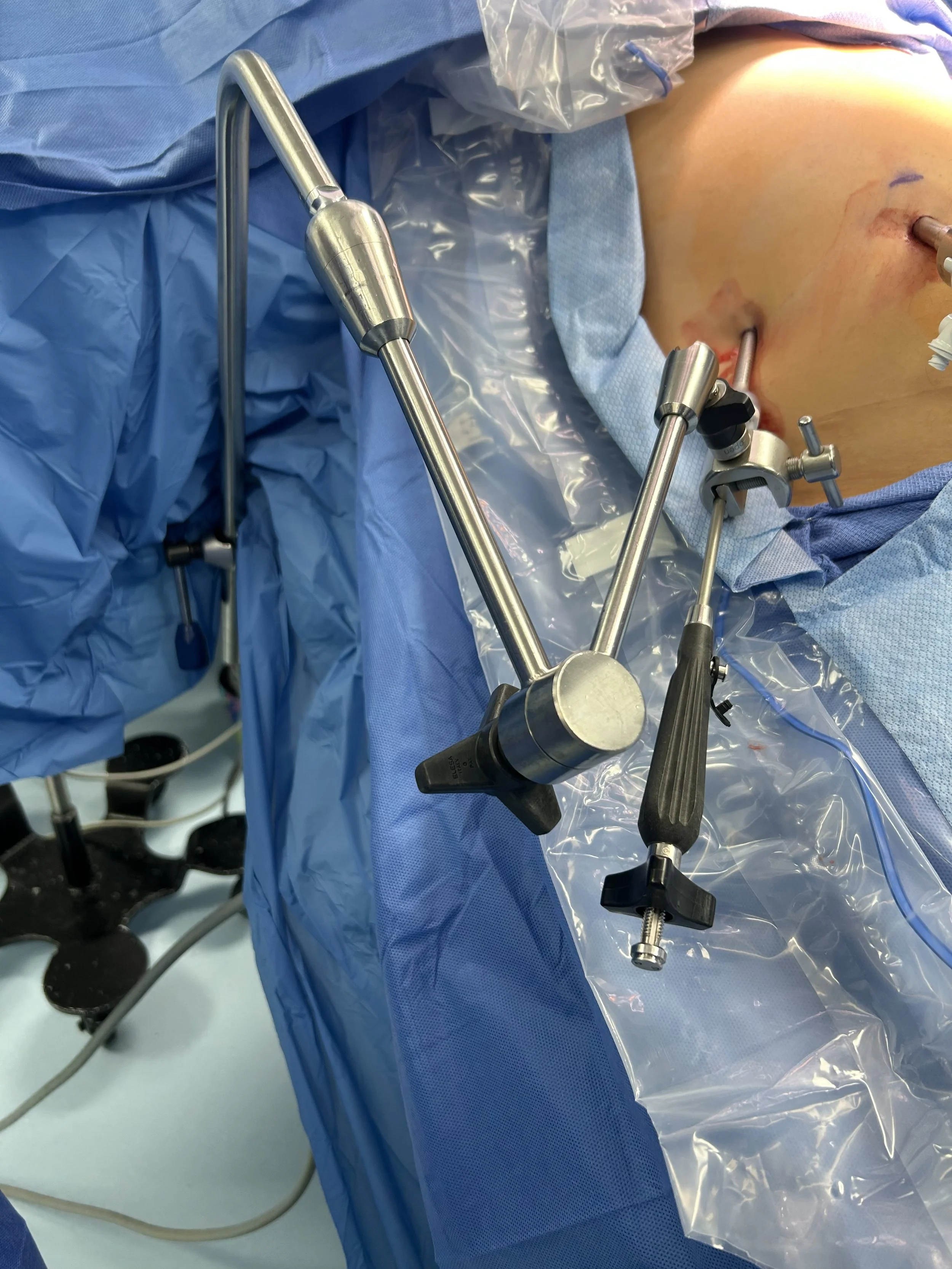
Nathanson bed post used to anchor snake retractor at patient right for robotic foregut case.
The hybrid snake retractor + Nathanson bed post worked great! I could see my surgical field well while the liver didn’t budge throughout the case. Thanks to the ingenuity of the entire team, our surgical tech, residents, and circulator, we were able to use what we had to accomplish our goal with a new combo post & retractor system. It was an important lesson in flexibility, team work, and creativity in the OR.
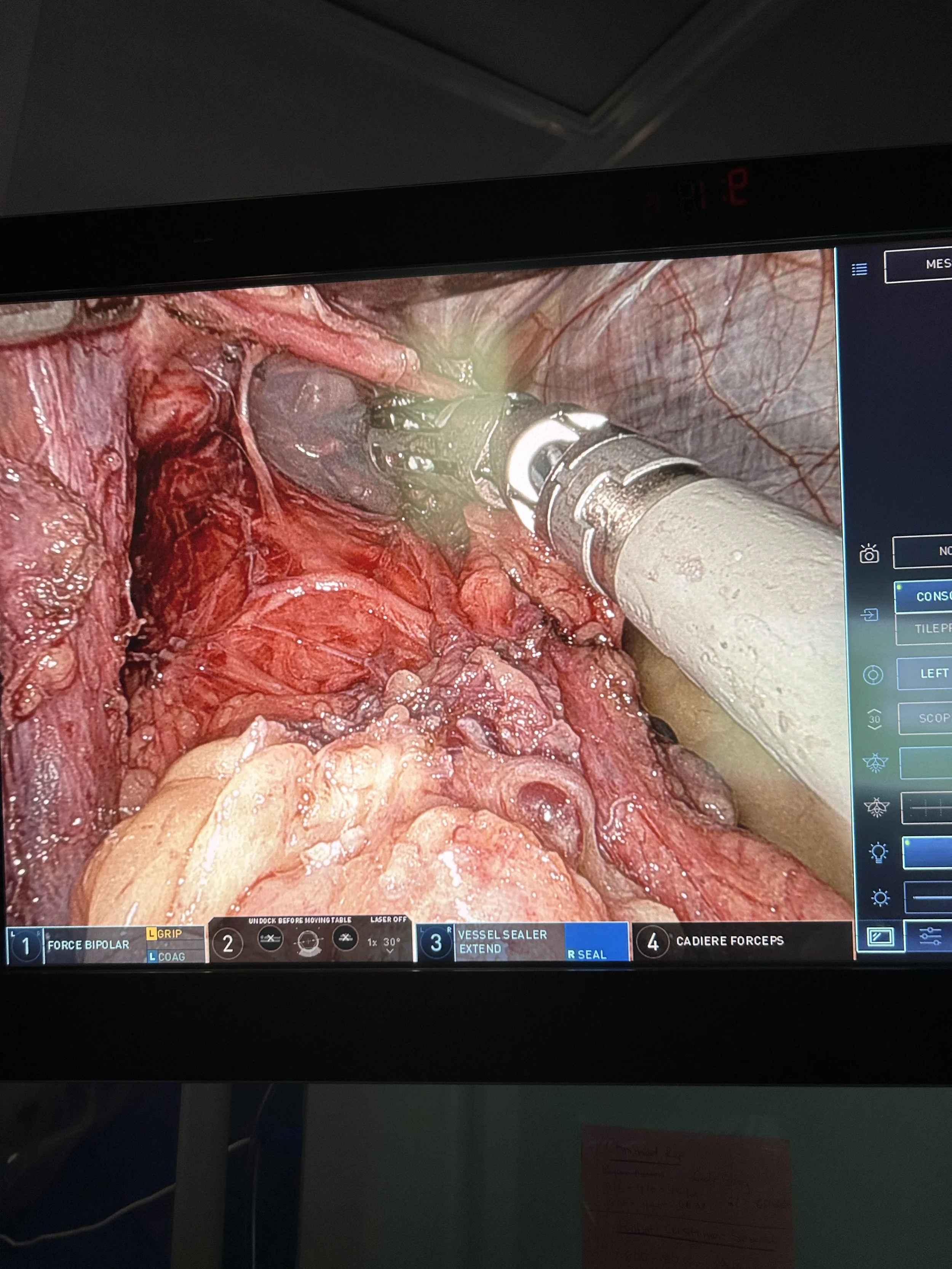
View of the anterior vagus nerve during mediastinal dissection of a paraesophageal hernia, enabled by liver retraction accomplished by our hybrid snake retractor + Nathanson bed post.
